My remote has stopped working. What do I check first?
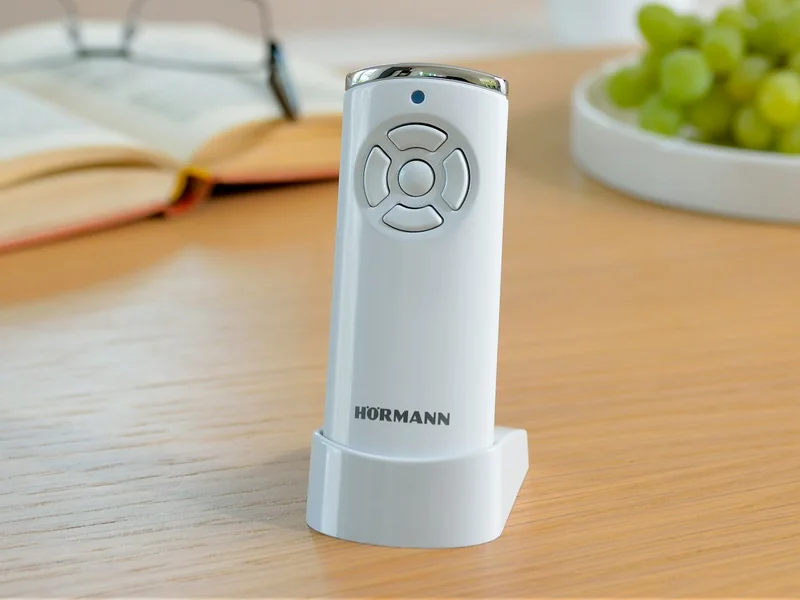
Try this first: the battery. It is the cause nine times out of ten. Open the case (most slide or unclip, some have a small screw) and note the battery type printed inside, usually a coin cell or a slim 12 volt. Fit a fresh one from a shop rather than a drawer, and check it is the right way round.
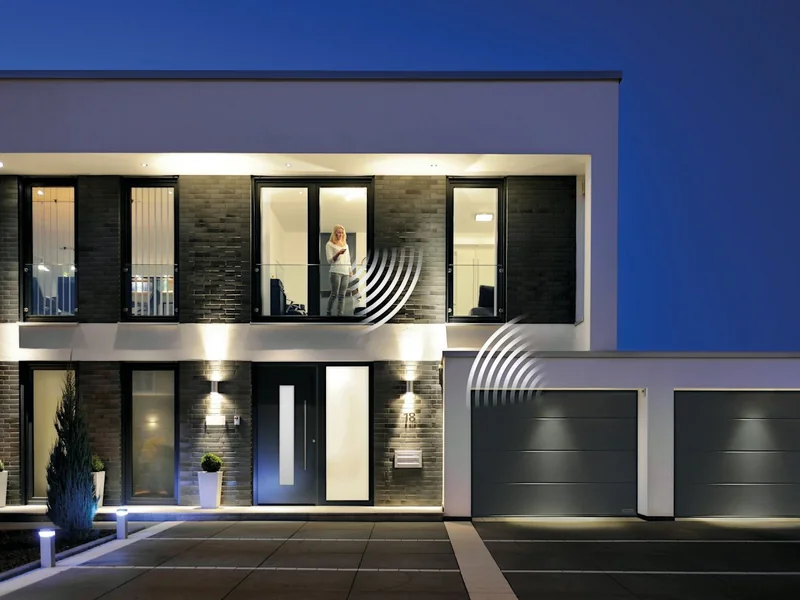
Then test it standing near the door. If the little light on the remote comes on when you press the button but the door does nothing, the remote is sending and the problem is at the receiver end. If the light does not come on at all, the remote itself has failed.
Also worth checking: is the wall button inside the garage working? If the wall button opens the door and the remote does not, it is a remote or receiver problem, not the operator.
If that has not sorted it, ring Barry on 01707 643654. Most of these are fixed on the phone.
I have changed the battery and it still does nothing.
On most systems a remote keeps its programming through a battery change, so it should simply work again. If it does not, there are three usual causes.
- The new battery is flat, or the wrong type. It happens more than you would think.
- The button contacts inside the remote have worn out. A remote that has been in a pocket or a car door for ten years does eventually fail.
- The remote has lost its pairing with the receiver, which is rare but does occur after a power surge or a very long time with no battery in it.
Re-pairing is a short job on most operators and one we can often talk you through on the phone. If the remote has genuinely died, a new handset is £64 plus VAT and we pair it for you.
If that has not sorted it, ring Barry on 01707 643654. Most of these are fixed on the phone.
I have lost my remote, or I have moved in and there are no remotes at all.
This is a common one. Ring us with the make of the operator (it is usually printed on the unit on the ceiling) and we will tell you which handset fits and what it costs. We supply and pair new handsets for every make we work with, and for many we do not.
If a remote has been lost rather than broken, it is worth clearing the receiver's memory and pairing only the handsets you actually hold, so that the lost one can no longer open your door. We do that as part of the same visit.
For very old operators, where handsets are no longer made, a new receiver can usually be added to the existing operator so that current handsets work with it. That is a fraction of the cost of a new operator.
The door will not open after a power cut.
Try this first: check the operator actually has power. Look for a light on the unit, check the plug is in and the socket is live, and check the fuse in the plug and the consumer unit. A power cut can trip a breaker that then needs resetting.
Most operators keep their settings through a power cut. When power returns, the first movement is often slower than usual while the operator finds its open position again. That is normal, and it should be back to full speed on the next cycle.
If the door was opened by hand during the power cut using the manual release cord, the operator may still be disconnected from the door. On most systems it re-engages by itself on the next run; on some you pull the cord again, or move the door to meet the carriage. If you are not sure which yours is, ring us before pulling anything.
If that has not sorted it, ring Barry on 01707 643654. Most of these are fixed on the phone.
The door opens but will not close, or goes back up on the way down.
An automatic door is designed to stop and reverse if it meets resistance or if something breaks the safety beam. So this is nearly always the door protecting you, not a fault in the operator.
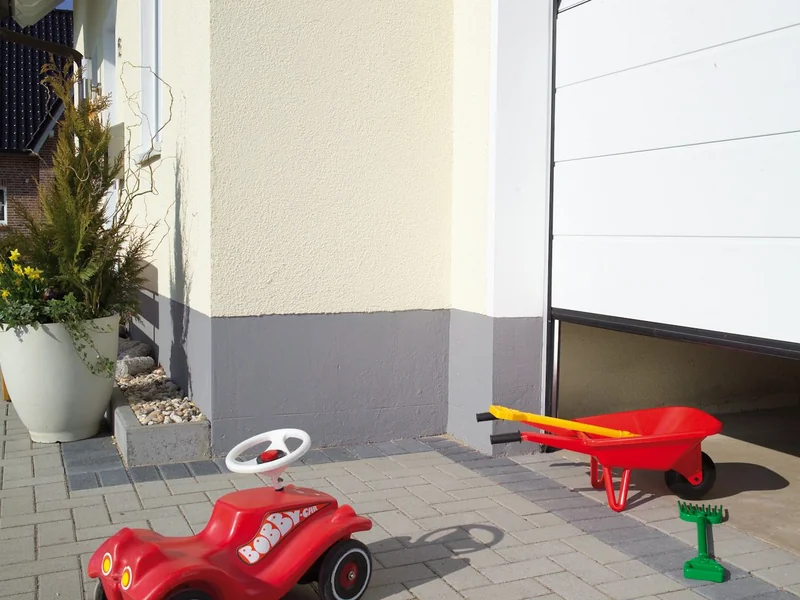
Try this first: look for anything in the way. A broom, a bin, a bike wheel, a stone in the track, a child's toy on the threshold. If you have photocells (small sensors low down on each side of the opening, common on sectional doors), check nothing is in front of them, wipe the lenses, and check they have not been knocked out of line. A misaligned photocell is a very common cause.
If the door is clear and it still reverses, it is usually because the door has become stiff or unbalanced and is asking more of the operator than its force setting allows. That is a service, not a breakdown, and it is best not left: turning the force up to compensate removes the very protection that is stopping the door.
If that has not sorted it, ring Barry on 01707 643654. Most of these are fixed on the phone.
The door is stuck part way and I cannot move it.
Stop, and do not force it. Do not keep pressing the remote, do not try to lift a door that has suddenly become very heavy, and keep children and cars clear of it.
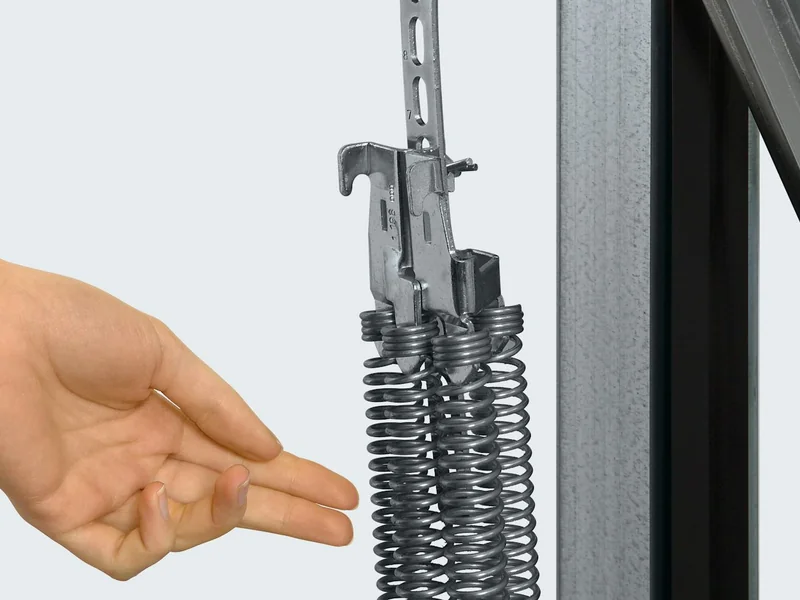
A door that is stuck part way, or that has dropped and will not lift, has usually broken a spring or a cable, or has come off its track. Springs hold a great deal of tension and a door that has lost one is dangerous to handle. This is a visit, not a phone fix, and we will get to you as quickly as we can.
If the operator is still running and the door is not moving, release the operator using the manual cord and leave the door where it is until we arrive. Ring us on 01707 643654 and tell us what happened; it helps us bring the right parts.
How do I open the door by hand if the power goes off?
Every automatic door has a manual release. On most operators it is a cord with a handle hanging from the carriage that runs along the rail on the ceiling. Pull it and the door disconnects from the operator so you can lift it by hand. A properly balanced door lifts easily; if it is heavy, a spring may be tired, which is worth mentioning when you ring.
The catch is that the cord is inside the garage. If your garage has no other door and the power fails while you are outside, you cannot reach it. For that reason we fit an external manual release, a small key operated lock on the door face that releases the operator from outside. It is £20 plus VAT and, if you have no side door, it is the one accessory we would insist on.
The door is noisy, slow or stiff.
Doors get noisier as they get older, and the noise is telling you something. Squeaking and grinding usually means dry hinges, rollers or pivots. Rattling often means loose fixings. A door that is slow, or that shudders on the way up, is usually out of balance, which means the springs are no longer doing their share of the lifting and the operator is straining.
Try this first: a light spray of silicone lubricant or a thin machine oil on the hinges, roller spindles and pivot points. Not on the tracks, which should be clean and dry, and never on a belt drive. Wipe off any excess.
If that quietens it, good. If the door is still slow or heavy, it needs its springs adjusting, which is not a home job. A quick test: release the operator and lift the door by hand to half way. A balanced door stays put. A door that drops or rises on its own is out of balance and is due a service.
If that has not sorted it, ring Barry on 01707 643654. Most of these are fixed on the phone.
My operator is 20 or 30 years old and the maker has gone. Can it be fixed?
Sometimes, and we will be honest with you about which. We have been fitting doors since 1980, so we know the older operators and can usually tell you on the phone whether spares still exist for yours.
Where parts are no longer made, the sensible answer is normally to keep the door and replace the operator. A new Hormann Promatic on an existing door is £360 plus VAT with fitting at £100, and it comes with two new handsets, a wall button, soft start and stop, and a safety reverse that an old operator simply does not have. It is quieter, too.
Old remotes are the other side of this. Handsets on obsolete frequencies cannot be bought any more, but a new receiver can often be added to the old operator so that current handsets work with it, if the operator itself is still sound.
Can my existing garage door be automated?
Usually, yes, and it is nearly always cheaper than a new door. The two things that matter are the type of door and the headroom above it.
- Up and over, retractable (horizontal tracks on the ceiling): the ideal case. An operator fits straight on.
- Sectional: fits straight on.
- Up and over, canopy (vertical tracks, door sticks out when open): needs a bow arm kit, £115 plus VAT, then automates well.
- Canopy with no tracks (pivot action): needs converting to horizontal tracks first.
- Side hinged timber doors: a hinge kit at £80 plus VAT lets a pair of doors swing open automatically.
- Roller shutter: these are normally built with their own motor rather than converted.
You need about 2 inches (50mm) of clear headroom between the top of the door at its highest point and the ceiling. The door types page goes through each type in more detail. If the door is rusted, bowed or not running true, we will tell you before you spend anything.
How often should a garage door be serviced?
Once a year. That is the interval we advise and the one the manufacturers advise, and it is about the same as a boiler. A door in heavy use, opening many times a day, benefits from a check every six months.
A service is the difference between a door that runs for twenty years and one that needs repairing every couple of winters. It keeps the springs balanced, the moving parts lubricated and the safety features working, and it catches the frayed cable or worn roller before it lets go. What a service covers is here.
Do you repair and service doors you did not fit?
Yes. Any make, any age, whoever fitted it. A great deal of our repair work is on doors fitted by other companies, some of which no longer trade, and on doors that came with the house.
If you can tell us the make of the door and the operator when you ring (both are usually printed on a label somewhere) it helps us bring the right parts, but it is not essential.
How much does a repair or a service cost?
Contact us for a price. That is the honest answer rather than a dodge: there is no single number to give. If we fitted your door you will have been told the service price at installation. If you are new to us, a short conversation on the phone, or a look at the door, is enough for a firm figure.
Repairs vary more than anything else we do. A fault on a door fitted last year can be a simple fix; a thirty year old door with no parts made for it is a different job entirely. We would rather look and give you a price you can rely on than quote blind. There is no charge for advice on the phone, and no travel charge within 20 miles of Potters Bar.
How much headroom do I need for an automatic door?
About 2 inches (50mm) between the top of the door at its highest position and the ceiling, within about 10 feet 6 inches (3.2m) of the frame, for every automated door type. The one exception is a pivot action canopy door, which has to be converted to horizontal tracks before it can be automated.
Sectional and roller doors are the ones to look at if headroom is tight, because they rise vertically rather than swinging out. The door types page has the requirements for each.
What do you need from me to give a price?
Two measurements and a photo. The wood to wood width, which is the opening measured between the inside faces of the frame, and the ground to wood height, from the floor to the underside of the frame at the top. A tape measure and a minute is all it takes.
Then a photo of the door from outside and one from inside the garage looking up at the ceiling and the top of the door, so we can see the headroom, the tracks and any obstructions. Send those to gdauto@btinternet.com or through the contact form and we will normally come back with a full price within a working day.
How long does fitting take?
Automating an existing door is usually a morning's work. A new single door, supplied and fitted with the old one taken away, is normally done in a day. Double doors, new frames and timber doors take a little longer, and we will tell you when we quote.
We carry stock of the popular doors and operators, so the wait from order to fitting is often days rather than the weeks a made to measure door takes.
Do I need planning permission to replace my garage door?
Normally, no. Replacing a garage door on a house is usually permitted development and needs no application. The exceptions are listed buildings, conservation areas and estates with an Article 4 direction, where the council may have a say in materials and appearance. If you are in one of those, check with the council before ordering. We can supply what you need once you know what is allowed, but the permission itself is yours to obtain.
Nothing matches that. Try another word, or ring 01707 643654 and ask.